


The Riskgaming newsletter started nearly a decade ago as the brain child of our scientist-in-residence Sam Arbesman, who dubbed it “Lux Recommends.” As we near issue #500, we’re taking a brief moment to revisit his top selections. This week: Sam’s picks on wonder and curiosities — from missing history to job searches for the weird.

Curiosities around the web
1. Darker ages
Let’s start with a big one: Did history actually happen? That’s the question behind Jonn Elledge’s 2022 analysis of the “phantom time hypothesis,” the idea that whole centuries of European history are entirely fabricated. Sam called the piece a fun romp, which it still is.
There is another school of thought, however, that has a rival explanation for the lack of written records from the centuries after Rome fell. It’s this:
They never took place.
Okay, sure, Rome fell, and there was a bit of a gap before medieval Europe got going, with its knights and its chivalry and its long, infuriating poems about how the most romantic thing to do here would actually be not to have sex. But, according to this theory, the year 1000 took place not a thousand years after the standard date for the birth of Christ, but after only 703 years later. Roughly 300 years of European history simply never happened.
2. Lost and found
Maybe we lost centuries, but we don’t generally lose technology, despite fantasy fiction and video game tropes. Back in 2024, Sam recommended Étienne Fortier-Dubois’s look at why: Genuinely lost tech is rare because important knowledge gets documented or reverse-engineered. When it does happen, it’s usually because nobody cared enough to preserve it.
Why is the Pantheon still standing after nearly 2000 years, while most of our concrete infrastructure crumbles after a few decades? Is it because we have lost the secrets of ancient Roman technology?
Not really. We know how to make durable concrete; it’s just more expensive than the alternatives that last 30-40 years. Besides, we have figured out why Roman concrete was so great. In many cases it is because of the addition of pozzolana, a material that comes from volcanic ash and was common in the region of Naples, near the Vesuvius volcano. Pozzolana can help concrete auto-repair its cracks, which is pretty cool, but not supernatural either. We sometimes use pozzolana in cement today, and there’s extensive research that goes into concrete chemistry, considering concrete’s huge economic importance.
3. Word salad
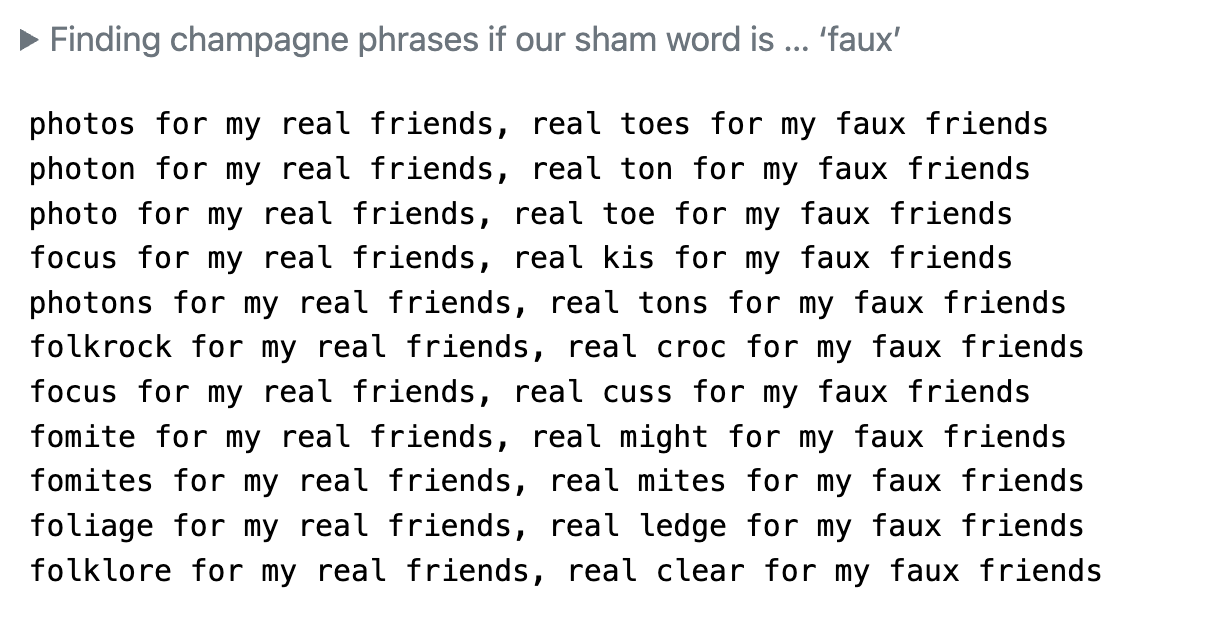
Next up, Jeremy B. Merrill’s description of “champagne phrases” — phrases that can be rewritten to sound equally positive or negative and can confuse natural language processing models. Jeremy built a tool to algorithmically generate variants of the phrase “champagne for my real friends, real pain for my sham friends” by finding words whose pronunciations split into a positive compound and a negative noun. Highlights from include “shampoo for my real friends, real poo for my sham friends” and “metrics for my real friends, real tricks for my meh friends.”
4. Dressed to kill
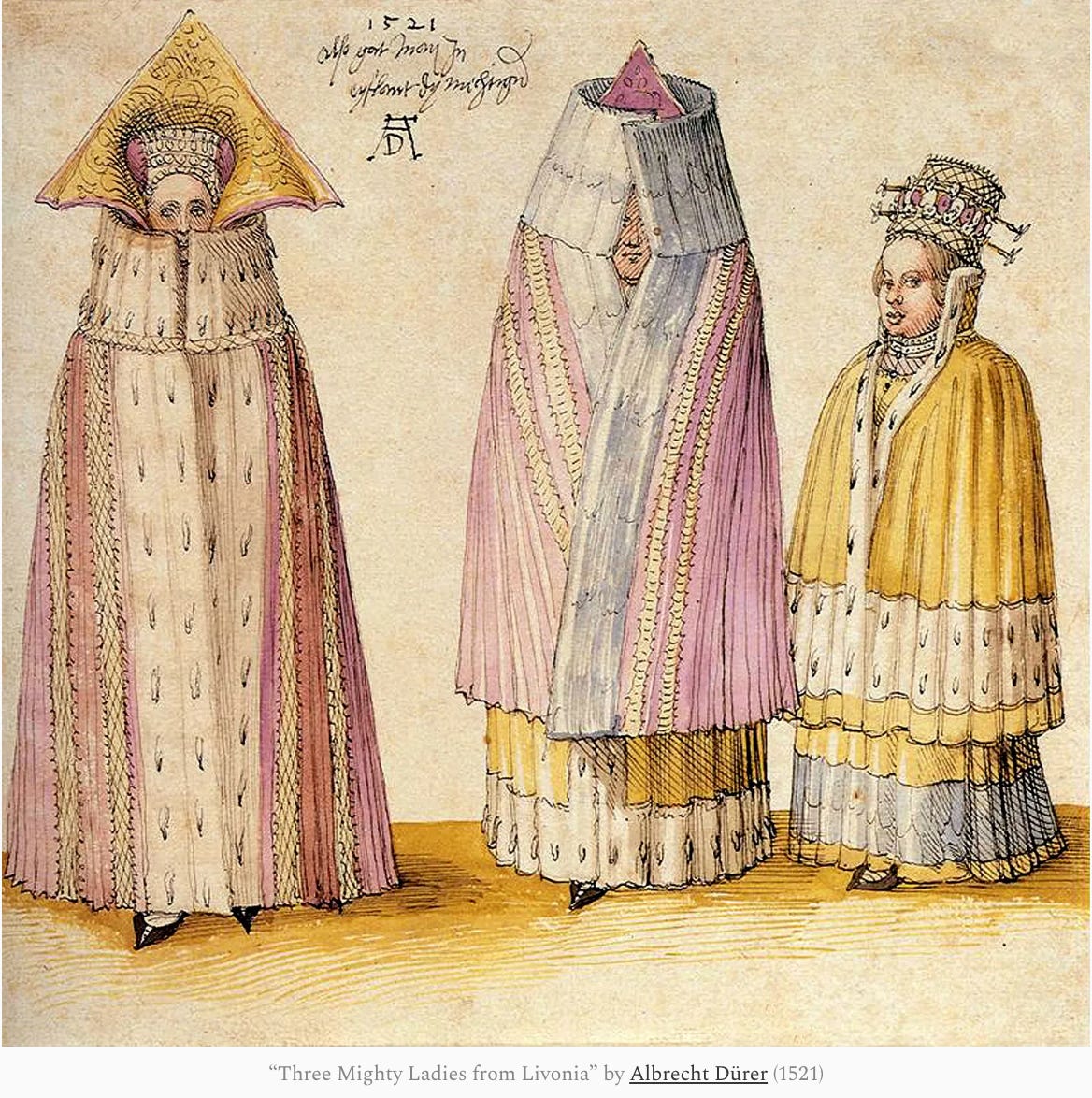
“Why did clothing become boring?” Benjamin Breen posed the question a few years back and explored explanations like industrialization and Beau Brummell’s influence, but finds them incomplete. Benjamin proposed that clothing used to be one of the few outlets for personal expression in restrictive societies, and became “boring” once people gained other ways to express their individuality.
5. Odd jobs
Finally, in time for the wave of college students hitting the job market, Sam found this excellent job search advice from Adam Mastroianni in Experimental History. In a nutshell: embrace your oddities, your curiosity, your wonder.
Do you not realize that, to me, and to almost everyone else, you are all completely nuts?
No, you probably don’t realize that, because none of us do. We tend to overestimate the prevalence of our preferences, a phenomenon that psychologists call the “false consensus effect.” This is probably because it’s really really hard to take other people’s perspectives, so unless we run directly into disconfirming evidence, we assume that all of our mental settings are, in fact, the defaults. Our idiosyncrasies may never even occur to us.
… This is why people get so brain-constipated when they try to choose a career, and why they often pick the wrong one: they don’t understand the craziness that they have to offer, nor the craziness that will be demanded of them, and so they spend their lives jamming their square-peg selves into round-hole jobs.


