Chimp civil war, why backpacks suck, and “Guess the Salary.” Plus what chess reveals about the future of AI.

From Lux Capital
Applied Compute, a Lux portfolio company that builds Specific Intelligence for enterprises in order to unlock the knowledge inside a company to train custom models, has announced $80 million in new financing, including from Lux. It now boasts a $1.3 billion post-money valuation.
From around the web
1. Chimps, they’re just like us
This week, Lux’s David Yang was amused by reporting in the Wall Street Journal about the Ngogo chimpanzee group in Uganda. A civil war broke out among the chimps after a leadership change led to factionalization. Coordinated lethal raids followed, and more than 24 apes have dies so far.
By 2018, the split was complete. The two groups had no remaining social or reproductive ties between them; the last chimp infant with parents from different groups was born in 2015. What was once the center of the group’s territory became a border, which chimps patrolled, the researchers found.
2. Bag limit
Also not evolving: backpacks. Scientist-in-residence Sam Arbesman recommends Keyana Sapp’s explanation of why yours sucks so much. Starting in 1986, VF Corporation, originally a lingerie company, began acquiring over half the U.S. backpack market (JanSport, North Face, Eastpak, Kipling) and systematically degraded product quality — cutting fabric density, swapping premium zippers for cheap alternatives, and reducing stitching — to hit profit margins.
A $35 JanSport that dies in eighteen months: $23 per year. Add the shipping cost when you try the warranty. Add the replacement cost when the claim gets denied. Add your time.
A $200 bag that lasts ten years: $20 per year. Already cheaper. At fifteen years, which the well-built ones consistently do, you’re at $13 per year.
The “expensive” bag costs less. But VF Corp doesn’t want you to do this math, because the $35 bag creates a repeat customer every eighteen months. The $200 bag creates one transaction and zero follow-ups. From a shareholder’s perspective, the bag that falls apart is the better product.
3. Pay dirt
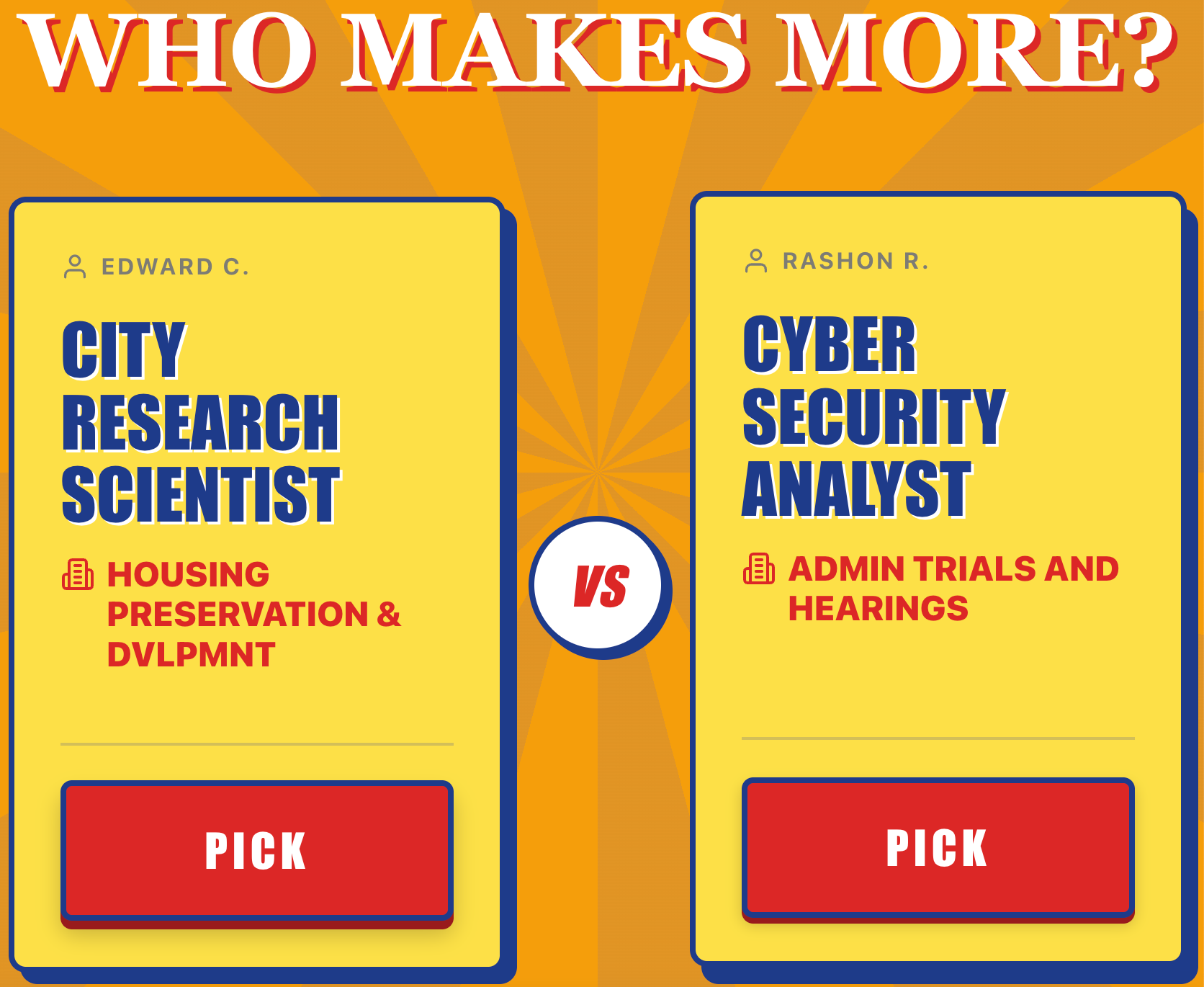
Also worth checking out if you want to fall down a rabbit hole: a new “Guess the Salary” game and benchmark of salaries for NYC public sector employees. The top earner will almost certainly surprise you. H/t Laurence.
4. Effective forecasters
On to AI: Laurence liked Dylan Matthews’ master class on updating your priors. Dylan reflects on attending an EA Global conference in 2015, where he dismissed the AI risk community as unserious — a judgment he now admits was badly wrong. His takeaway: stop dismissing bold, “futurist-seeming” predictions, and give more weight to the community that got it right when almost everyone else didn’t.
When I hear predictions of 30% year over year economic growth, my default response is extreme skepticism. In 2015, my response would’ve been outright dismissal. I still don’t think this is the most likely outcome. There are sound reasons to doubt it. But I’ve made the error of dismissing crazy-sounding predictions from the AGI-pilled before, and I am not keen to do it again.
5. Blind spot
Also bringing fresh perspective on AI this week is Carlo Iacono in “Hybrid Horizons.” Carlo reflects on how his extensive writings on AI have focused almost entirely on concerns relevant to wealthy, Western populations — academic integrity, cognitive sovereignty, alignment — while ignoring the far more consequential ways AI is already transforming life for the global majority.
A woman in rural Rajasthan who receives an AI-interpreted chest X-ray for tuberculosis has not had her cognitive sovereignty eroded. She has received a diagnosis that no human radiologist was available to give. A farmer in western Kenya whose phone identifies cassava mosaic disease has not suffered an apprenticeship layer collapse. He has accessed knowledge that his country’s extension service could not deliver to his village. The entire vocabulary of loss that structures the Western AI debate, the anxiety about what we are giving up, does not translate into contexts where the baseline was absence. For billions of people, AI is not a threat to existing capability. It is the first capability they have had.
6. Signal boost
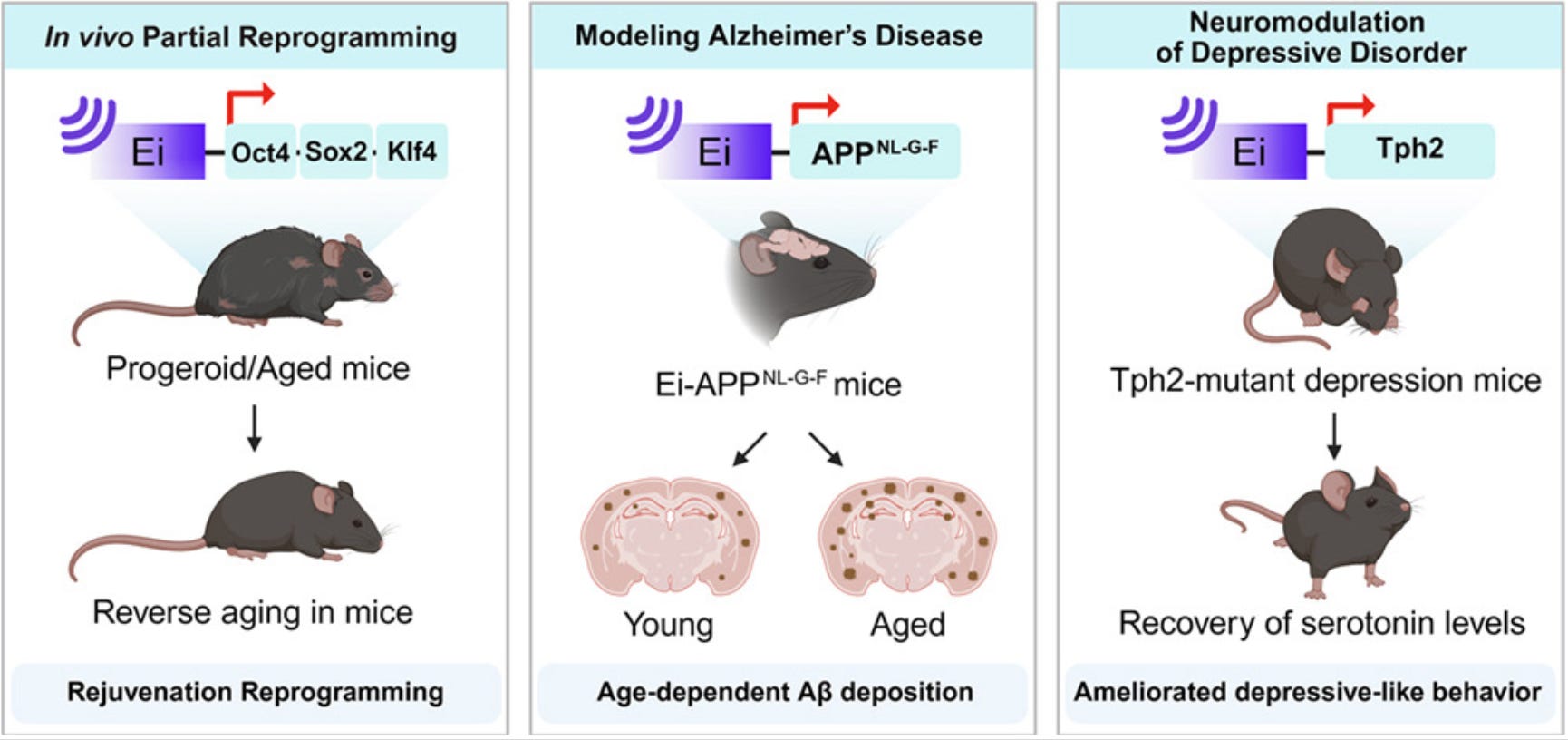
Finally, Lux’s Shaq Vayda highlights a new study in Cell. Scientists have apparently developed a way to turn specific genes on or off in living animals using electromagnetic fields (like those from common devices), without surgery or drugs. They discovered this works by triggering a very specific pattern of calcium activity in cells. In tests on mice, they used this system to study aging, model Alzheimer’s disease, and treat depression-like symptoms.