

Ready for war, gray zones, AI in science
Lux Recommends #487

Russia’s war footing, the gig economy for terrorism, AI in scientific research, and AI over SMS. Plus Hank Anderson on how AI data centers can help small towns secure their water supplies.

Thanks for Joining!
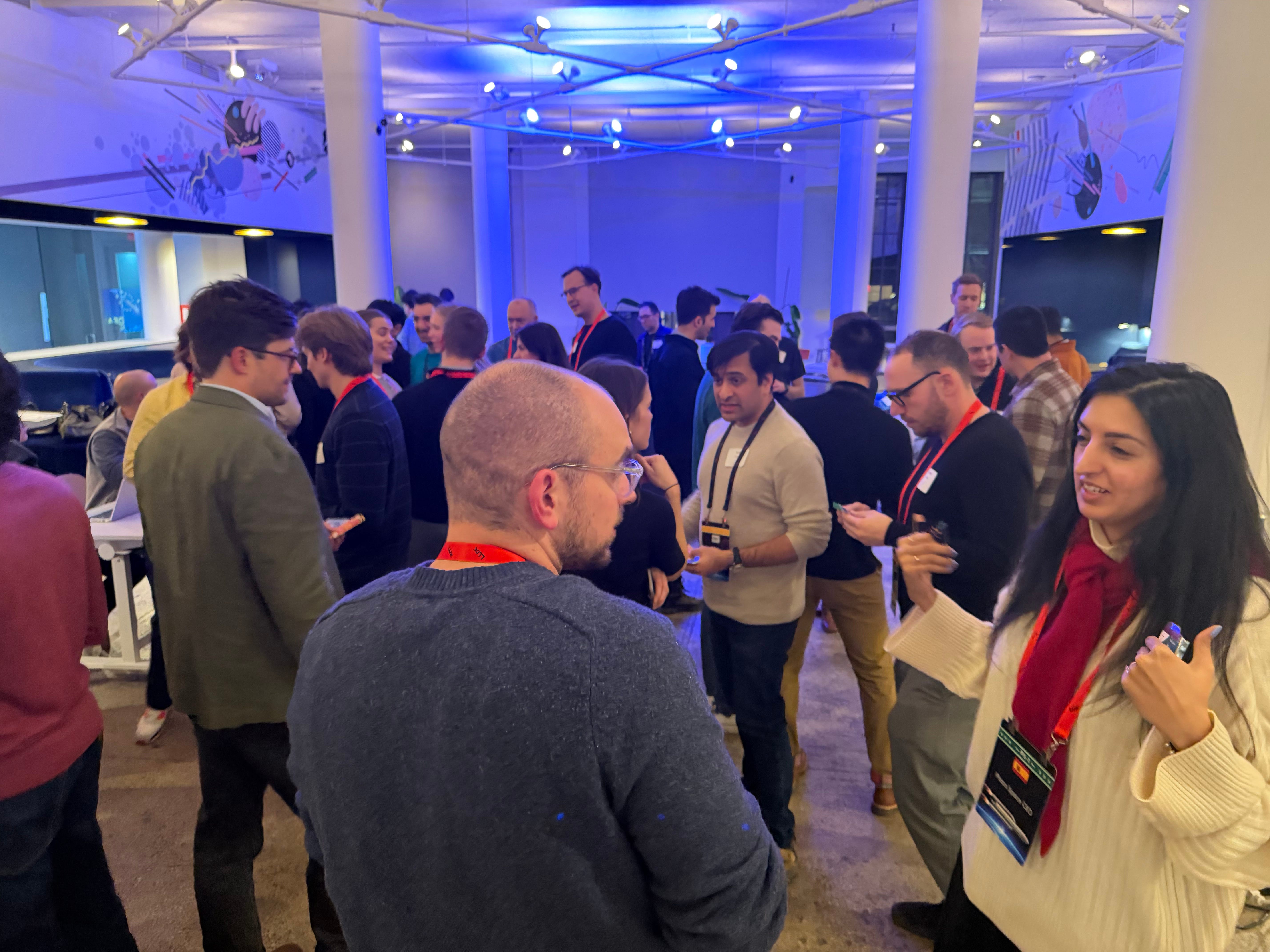
We had a lot of fun last night beta-testing Laurence Pevsner’s new game Dead Reckoning. As Yuma Kim wrote last week, it explores Europe’s space trilemma between dependency, capability and jobs. How did dozens of players perform extracting Europe from its dependency trap? Well, pretty much perfectly terribly!
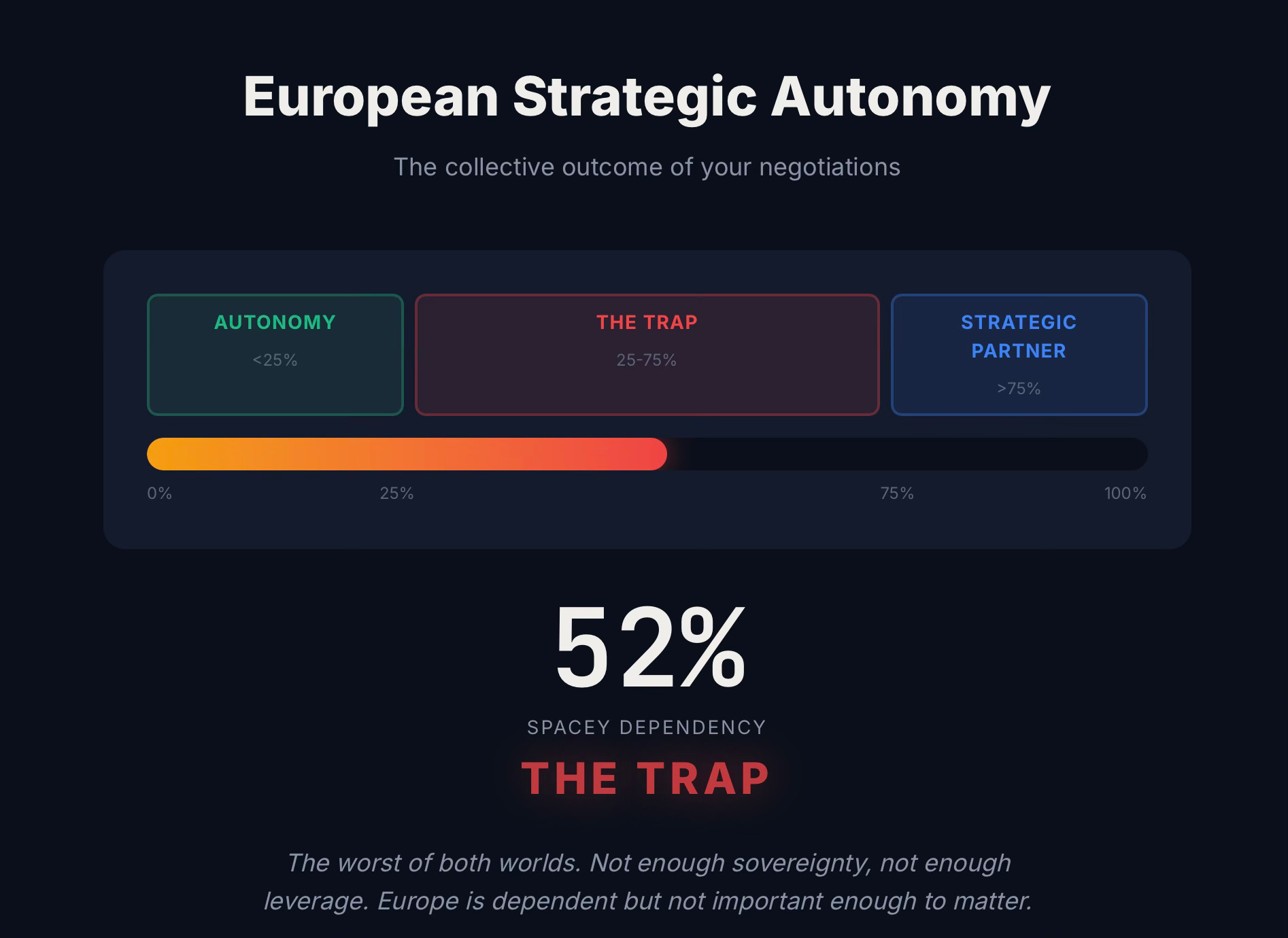
Laurence is working on a few small calibrations, but otherwise, the beta test showed our game is pretty much launch-ready. We’re really looking forward to sharing the game with you shortly.
From Lux Capital
The United States can’t reindustrialize with financial institutions that don’t understand hard-tech startups. Erebor is a new digital bank aiming to fill that need. Lux led the neobank’s most recent round of funding as it emerged from stealth and secured the first new bank charter issued under the Trump administration.
Founded by Palmer Luckey and led by co-CEOs Owen Rapaport and Jacob Hirshman, Erebor says it will be the “farmers’ bank” for tech startups, filling the void left by Silicon Valley Bank. It will be the first national chartered bank to hold crypto assets on its balance sheet and to operate seven days a week.
The genesis of the bank came from Luckey, who was searching for a better financial partner for his portfolio of industrial companies. Traditional banks often moved too slow or had too many processes for new startups with innovative business models. This is particularly true in reindustrialization, where many banks assume scale and won’t even take on smaller but rapidly growing clients.
Erebor will hold roughly double the capital buffer required by a typical bank and offer modern underwriting to startups that’s designed for today, not the past. To fuel innovation, tech CEOs should be focusing less on bank risk and more on building hypersonics and developing critical minerals refineries. Erebor promises to give them that.
In other Lux news, Forbes’ new profile of Qasar Younis and Peter Ludwig, the cofounders of Applied Intuition, is well worth a read. The two are building software that can drive anything, and their company booked $800 million in revenue last year alone—and they remain cash-flow positive, as they have been essentially from inception.
Finally, two Lux companies — Anduril and Nominal — have paired up to allow Anduril to more quickly test across their dozens of autonomous vehicle programs.
From around the web
1. Hard power
European governments have moved up their estimates of when Russia could attack NATO members — from 2029 to within a year. Reporting in WSJ shows how tensions with the United States and Russia’s switch to a war economy have made an incursion more likely. Even worse, a recent German wargame simulating Russian aggression in Lithuania showed that NATO would catastrophically fail to halt the attack. H/t Hank.
In the wargame, absent American leadership, Russia managed within a couple of days to destroy the credibility of NATO and establish domination over the Baltics, by deploying an initial force of only some 15,000 troops.
2. Side hustle
In many respects, of course, Russia isn’t waiting to strike. In Politico, journalist Elisabeth Braw describes Russia’s “gig” model of sabotage: It uses messaging apps to recruit ordinary citizens as freelancers, whom it pays for tasks like the 2024 arson attack at a Warsaw shopping mall and sending package bombs through DHL across Europe. This strategy provides the Kremlin plausible deniability and creates a law enforcement nightmare.
But as the incidents to date illustrate, this type of gig gray-zone aggression is highly disruptive and dangerous. We risk the prospect of constant attacks, while the taskmasters on the other side of the chat watch their gig workers sow destruction as their own involvement remains virtually impossible to prove, let alone prosecute or avenge. And they don’t just operate from Russia either — other hostile states are already using the gig model and are likely to expand it.
Reporting by Josh Yaffa in The New Yorker adds another wrinkle: Russia’s recruits are often vulnerable Ukrainian refugees who don’t realize who they’re working for — or that the activities they carry out are meant to erode European support for accepting Ukrainian migrants and aiding in Ukraine’s defense.
A man in Latvia looking to buy marijuana on Telegram ended up enlisted to draw graffiti outside a nato cybersecurity center in Estonia; later, his Telegram handler got him to take surreptitious photos of a Latvian military airbase. The man was arrested after dropping a sheet of paper on which he’d scribbled his handler’s instructions, along with a doodle of an airplane.
About a year ago, I spoke to Daniela Richterova, who had just published a paper on Russia’s gig-economy model for terrorism, for the Riskgaming podcast. Check out our conversation to learn more about Russia’s going rates, the chaos their gray-zone warfare has already caused and what the United States should do.
3. Artificial science
To change gears, Laurence recommends a new paper from researchers Qianyue Hao, Fengli Xu, Yong Li, and James Evans. They analyzed 41.3 million scientific papers published between 1980 and 2024 to assess how the arrival of AI has changed the field. The results: Scientists who used AI tools published over 3 times more papers and received almost 5 times more citations, but AI adoption drastically narrowed the field. It shrunk the volume of scientific topics studied by almost 5% and decreased collaboration between scientists by 22%.
In all fields, AI-augmented research focuses on a narrower scope of scientific topics and reduces the scientific engagement of follow-on research, leading to more overlapping research works that slows the expansion of knowledge. Further, with a greater concentration of collective attention to the same AI papers, the adoption of AI appears to induce authors to engage in collective hill-climbing, catalyzing solutions to known problems rather than creating new ones.
4. Text intelligence
Laurence also flagged a research project by Joseph Levine and Johanna Barop to study the rise of AI tools that operate over SMS text messaging, specifically AfriGPT in Sierra Leone. Many of the users of these tools, they note, have never been online, which means their use of AI will could be fundamentally different from the usage data we’ve seen so far from the bigger LLMs.
Where we expect an overlap with the datasets from the AI labs is on personal topics. “How-to” advice on e.g., cooking and housework made up 10% of all messages in the ChatGPT dataset, and romantic advice took up 2%. People everywhere go through breakups, fight with their parents, and need help cooking dinner. These are general purpose technologies, and the most general uses will appear broadly.

