


Will China win AI, our fascination with post-apocalyptic maps, the search for Leonardo da Vinci’s DNA, and more. Plus “The Origins of Efficiency” with Brian Potter.
From Lux Capital
OpenAI and Anthropic have both recently introduced AI for healthcare products. In a piece on the rollout and what it means for the sector, Alex Konrad at Upstarts quotes our own Deena Shakir:
The headline isn’t that healthcare is big, it’s that the AI labs are finally treating it as unavoidable. Health already is one of the heaviest, stickiest use cases for large models, especially on the consumer side. What’s new is the seriousness on the enterprise side.
The partnerships with health systems and pharma signal a recognition that healthcare doesn’t change through standalone tools. It changes when technology shows up inside existing institutions and earns the right to stay.
From around the web
1. Dead end?
Iran is obviously on the brain this week as protests around the country — and the crackdown against them — swell. It’s hard to know what will happen next, but according to one anonymous writer in Iran: not much. Writing for Persuasion, the author points out a few core impediments to change: the regime’s opaque power structure, the resistance’s lack of a leader, and the appeal to the rest of the world of a the status quo.
The Islamic Republic is not a pyramid of power; it’s a maze. Every corridor looks like an exit until it loops back to the same center. The design isn’t accidental; it’s survival architecture.
2. Strategic optimism
Between Iran, Venezuela and Greenland, it’s been hard to know where to focus this week. In the interest of not losing sight of the other major geopolitical theme of the year, though, we’re recommending a few stories on China. First, for the AI crowd: At the recent AGI summit in Beijing, Chinese AI leaders debated whether and how soon China could lead global AI development. (Opinions ranged from cautious optimism to strong optimism.) Of note was the riff below from AI exec Tang Jie, who recently led his company Zhipu AI to a successful IPO.
Innovation often erupts when we pour in resources but stop seeing gains.
Scaling still brings value—you can go from 10TB of data to 30TB or 100TB. But we have to ask: Is it worth it? What’s the return on that 1 or 2 billion dollars? If the improvement is tiny, the math doesn’t work. Same goes for re-training the foundation and RL loops every time—it’s just not efficient.
What we need is a new paradigm to measure return: Intelligence Efficiency.
If your goal is to increase the upper limit of intelligence, brute-force scaling is the dumbest way to do it. The real challenge is: how do we achieve the same gains with less scaling?
That’s why I truly believe a paradigm shift is coming in 2026. And we’re working hard to make sure we’re the ones leading it.
3. Powered up
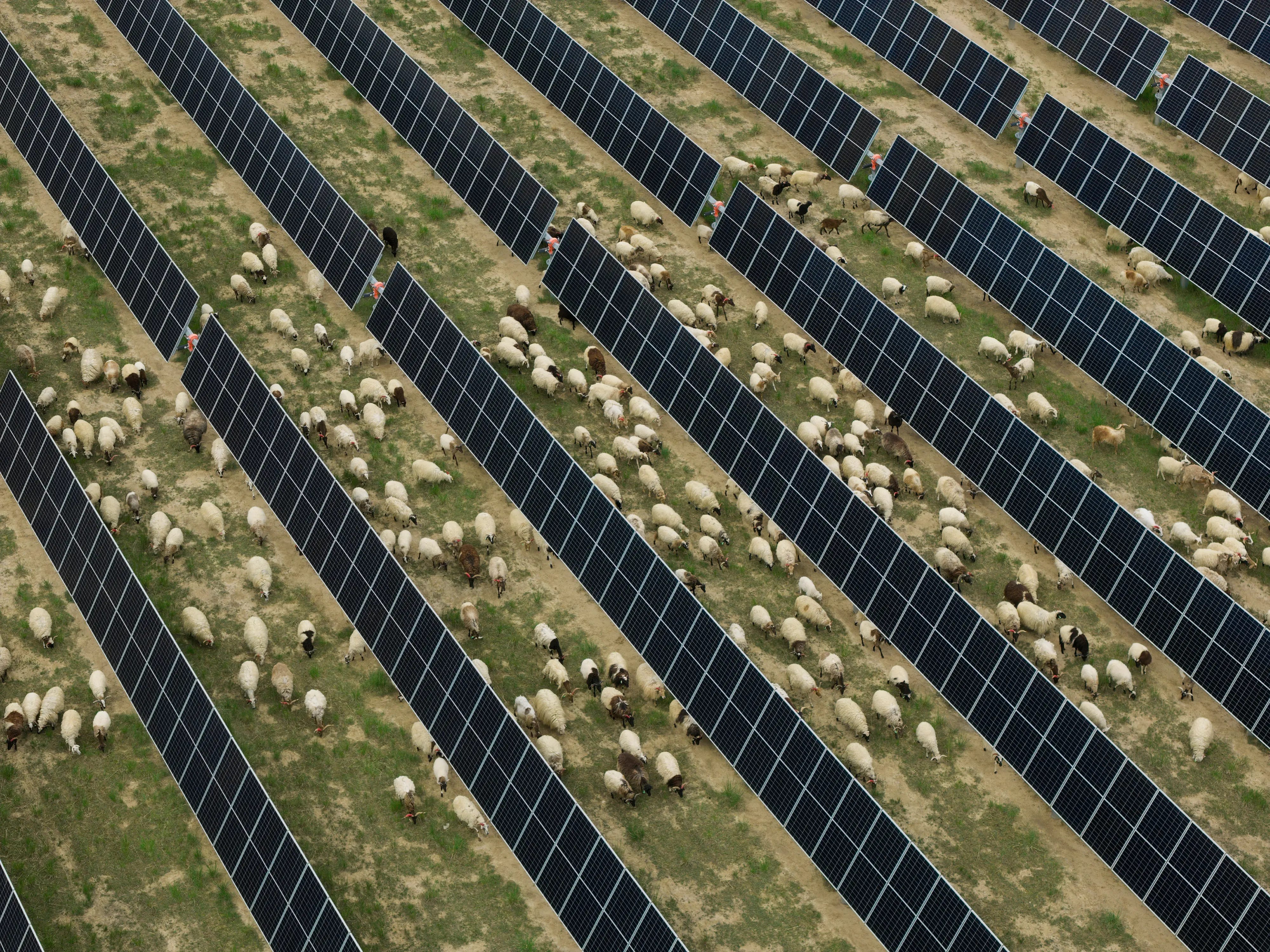
Last year, meanwhile, China installed over half of the world’s new global wind and solar capacity. In May alone, it even added enough to power all of Poland. Photographer Weimin Chu’s photographs in Yale E360 of the transformation helped me wrap my head around the scale of development.
4. Where babies come from
I enjoyed recent reporting in the Wall Street Journal about Chinese clients using America’s surrogacy industry in pursuit of eye-popping numbers of U.S.-born babies — sometimes dozens or more — in circumvention of China’s ban on domestic surrogacy. Not surprisingly, proposed restrictions on the U.S. side on such surrogacy have followed.
When Pellman called Xu Bo in for a confidential hearing in the summer of 2023, he never entered the courtroom, according to people who attended the hearing. The maker of fantasy videogames lived in China and appeared via video, speaking through an interpreter. He said he hoped to have 20 or so U.S.-born children through surrogacy—boys, because they’re superior to girls—to one day take over his business. Several of his kids were being raised by nannies in nearby Irvine as they awaited paperwork to travel to China. He hadn’t yet met them, he told the judge, because work had been busy. The market has grown so sophisticated, experts say, that at times Chinese parents have had U.S.-born children without stepping foot in the country. A thriving mini-industry of American surrogacy agencies, law firms, clinics, delivery agencies and nanny services—even to pick up the newborns from hospitals—has risen to accommodate the demand, permitting parents to ship their genetic material abroad and get a baby delivered back, at a cost of up to $200,000 per child.
5. Scarymandered
On the U.S. side, the vibes are even weirder. This week, our scientist-in-residence Sam Arbesman recommends Frank Jacobs’ look at our cultural fascination with post-apocalyptic maps, from the geography of “Station Eleven” to “The Last of Us.” A common theme, he writes, is balkanization — fragmentation into smaller hostile regions based on religion, ethnicity, or politics — which underscores our anxieties about the precariousness of the American experiment.
America is rehearsing its disaggregation in the safest possible arena — that of science fiction, the comments section of history. In the safety of post-apocalyptic fiction, America is fabricating a future that is nostalgic for the present. The message is that, even with all of its problems and divisions, today is valuable enough to want to preserve. But should the worst happen, then even on the other side of a possible future apocalypse, there is still hope. Why else would anyone make a map of it?
6. Command control
If the United States does break apart, I’m guessing Larry and David Ellison will want to rule whatever group is based out of Hollywood. Laurence nicely captures the father-son dynamic analyzed by Reeves Wiedeman in New York Magazine: Great long piece, but can be summed up by one Steve Jobs anecdote in it:
Steve Jobs told one of Larry’s biographers that he was impressed that his friend was even willing to go up in a plane with teenage David at the controls. “He’s risking his life with his son,” Jobs said. But when Larry heard this comment, he said Jobs was forgetting one thing. “The fact of the matter is that if David does something stupid, I’ll grab the stick,” Larry said.
7. Genius genetics
Before I go, I urge you to check out Richard Stone in Science. His tale of the search for Leonardo da Vinci’s DNA will take you from life in fifteenth-century Tuscany to the efforts of a cutting-edge, globe-spanning genealogical project. Science has nearly progressed enough to use touch DNA to authenticate disputed artworks or even discover the nature of the old masters’ genius — with major ramifications for today’s art markets.
Yet some of what made Leonardo unique seems rooted in biology. His extraordinary ability to capture subtle shifts of light and motion, for example, has long hinted at exceptional visual acuity. LDVP aspires to one day find genetic variants that could account for it, says Gonzalez-Juarbe, who works at the University of Maryland. “Our hope is to open a door to explaining what was so unique about the smartest guy in history.”


