

The anodyne bonhomie of Hill and Valley will soon be a relic
One last breath of normality for the Valley set before the Hill populists attack

Tech’s twilight in DC is rapidly approaching, what with the AI backlash in full swing, Meta and YouTube facing record fines over safety after a jury’s award, and Senator Bernie Sanders and Representative Alexandria Ocasio-Cortez proposing a complete halt to all data center construction. Surrounded by so many enemies, “… Sometimes you wanna go / Where everybody knows your name / And they’re always glad you came.”
That classic Cheers theme song captures the vibe of this week’s Hill and Valley Forum, now in its fourth iteration. Lux is a major sponsor of the event, as are multiple of our portfolio companies.
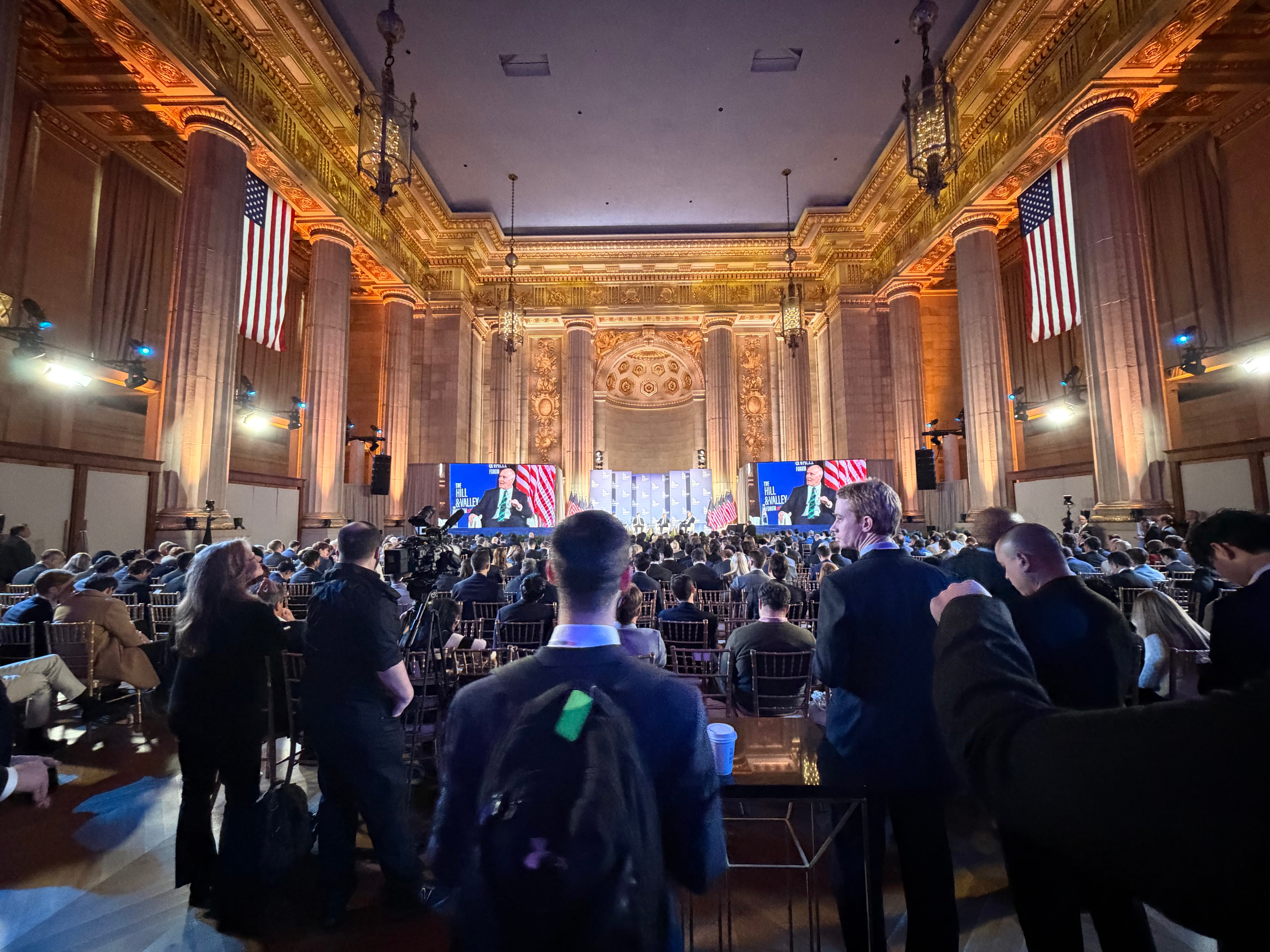
This week’s rendition was the largest ever, overflowing across the stately Andrew W. Mellon Auditorium just a stone’s throw from the White House. So overflowing, in fact, that the fire marshal held up the lines outside for what one venture capitalist friend told me was at least 90 minutes. Apparently, some speakers were even stuck serpentining in the TSA-like queue snaking along Constitution Avenue, forcing the hall’s exasperated Voice of God to repeatedly order everyone to stop networking and sit their asses in chairs. “We are in a holding pattern!” she cried out, a term that could equally describe most policymaking in DC these days.
What’s striking about Hill and Valley is just how fast the agendas and the types of participants have changed. When the Forum started, it was just a dinner organizing a ban on TikTok, part of a broader China hawk agenda driven by co-founder Jacob Helberg, who today is Under Secretary of State for Economic Growth, Energy, and the Environment.
Fear of the adversary was latent throughout the 2024 forum, with panels like “Are we ready for an AI Pearl Harbor?” and others focused on China and Russia. That line of argument disappeared in last year’s muddled messaging, which was held in the immediate aftermath of Trump’s “Liberation Day” tariff fusillade. The dichotomy at dinner between the tariff-loving keynote speaker Howard Lutnick and the venture capitalists arrayed across the banquet tables scanning their badly bruised public market portfolios was jarring.
The barbarians at the gate have become the regents of the tower.
Taking a cue from Cheers, this year’s conference was nothing but bonhomie on stage and in the networking niches on the fringes. As the populist backlash against AI grows ever more clamorous, Jamie Dimon was on stage talking about the strategic financial opportunities of American manufacturing while commenting on the jobs of the future, including “being a teller at a J.P. Morgan branch, 50, 40,000 dollars per year” in one of the great verbal downward corrections of the day. Speaker of the House Mike Johnson gave a sop to the political infighting, offering a cogent, fluent and principled speech on the value of competition and markets. It was the best example of an unquotable antimeme I may have ever witnessed.
Part of the challenge is that the barbarians at the gate have become the regents of the tower. The production scripting of the event precluded any debate more robust than an MBA seminar in which everyone had worked as a BA at McKinsey. I witnessed no moments of drama. Even last year’s one-man protest from the gallery aimed at Palantir’s Alex Karp seemed deterred by the line outside.
There was a fleeting moment of excitement when Curie.Bio’s Zach Weinberg gave a passionately skeptical take on the immediate impact of AI-based in-silico models on pre-clinical research data, while ARPA-H director Alicia Jackson forcefully pushed back, saying “No, I totally disagree” and argued that the work of her agency and the FDA could save months or even years off drug trials. Senator Todd Young, a fellow panelist, tried to calm the waters, offering “Not staged, not staged, not choreographed” and joked that the two could continue the conversation backstage. Scandal! The moderator then cut off this colloquy with a new question of “What are you most optimistic about?”
It wasn’t just that the agenda has drifted toward the anodyne over the years, but that the bipartisan audience of the event has drifted out as well. Democratic crossovers like Ritchie Torres, Cory Booker, Kyrsten Sinema and Jeanne Shaheen were still well-represented on stage, with this year’s cast including Senators Chris Coons, Mark Warner and Maria Cantwell as well as Congressman Josh Gottheimer. But if there was a Democratic staffer or think tanker walking the floor, they hid their affiliation very well. The near-unanimity of the TikTok ban a few years ago has unfortunately given way to the polarizing politics of the Trump 47 vintage.
Governing is about tradeoffs and challenges, but it’s harder when everyone is trying to avoid creating daylight between themselves and the administration.
Where was the debate between Ro Khanna, Silicon Valley congressman, and Delian Asparouhov, co-founder of both Varda and the Hill and Valley Forum, over California’s wealth tax proposal? Where were Ocasio-Cortes and Sanders slugging it out with 8VC’s Joe Lonsdale on degrowth, a matter-antimatter combustion that would have driven half of the DC political press corps mad for front-row seats for the Bellum in the Mellon. Pay-per-view this was not.
Notably, Hill and Valley seems to have become far more valley than hill. Walking the floor, every venture capitalist and quite a few founders in the reindustrialization, aerospace and defense markets were hobnobbing at elevated volume over decadent cake pops or while waiting in the defunct Global Entry–like line for the men’s room (the women’s room down the hall was wide open, and more than one guy commented to me on how unfair the whole situation was). I ran into a VC I haven’t seen in person since their wedding a decade ago, several founders who are now posteconomic since the last time I got coffee with them, and even a handful of media friends I dearly miss. Amid a group like this, you really do feel like Norm.
That tight-knit crowd, though, was also the Forum’s struggle. More than one VC came up to me asking to meet DC types, grousing that “everyone here is just making deals!” Get with the program: after all, making deals is what the Trump administration is all about. No one ever really wants to hang out with the disheveled denizens of Cannon and Longworth.
Governing is about tradeoffs and challenges, but it’s harder when everyone is trying to avoid creating daylight between themselves and the administration. I didn’t listen to every panel, so I may have missed the critical moment, but Iran and the Strait of Hormuz was the arbitrage subject discussed most heavily in the hallways and not on stage. This crowd, which leans MAGA isolationist although not to the same degree as Reindustrialize in Detroit, has no more idea on how to handle a new war in the Middle East than they did last year with a massive tariff regime straight out of the Gilded Age’s economic playbook.
In the end, it’s one part bacchanalia and one part exclusive club. The parties were good and over-attended, there were a panoply of productive side events, and it’s nice to force everyone from the Valley to put on a suit for 24 hours once a year before they all clamber over each other for a seat on one of the three daily DCA-SFO flights back home (or in my case, dodging the phalanx of security at Union Station before Trump addressed the NRCC in the train station’s lobby).
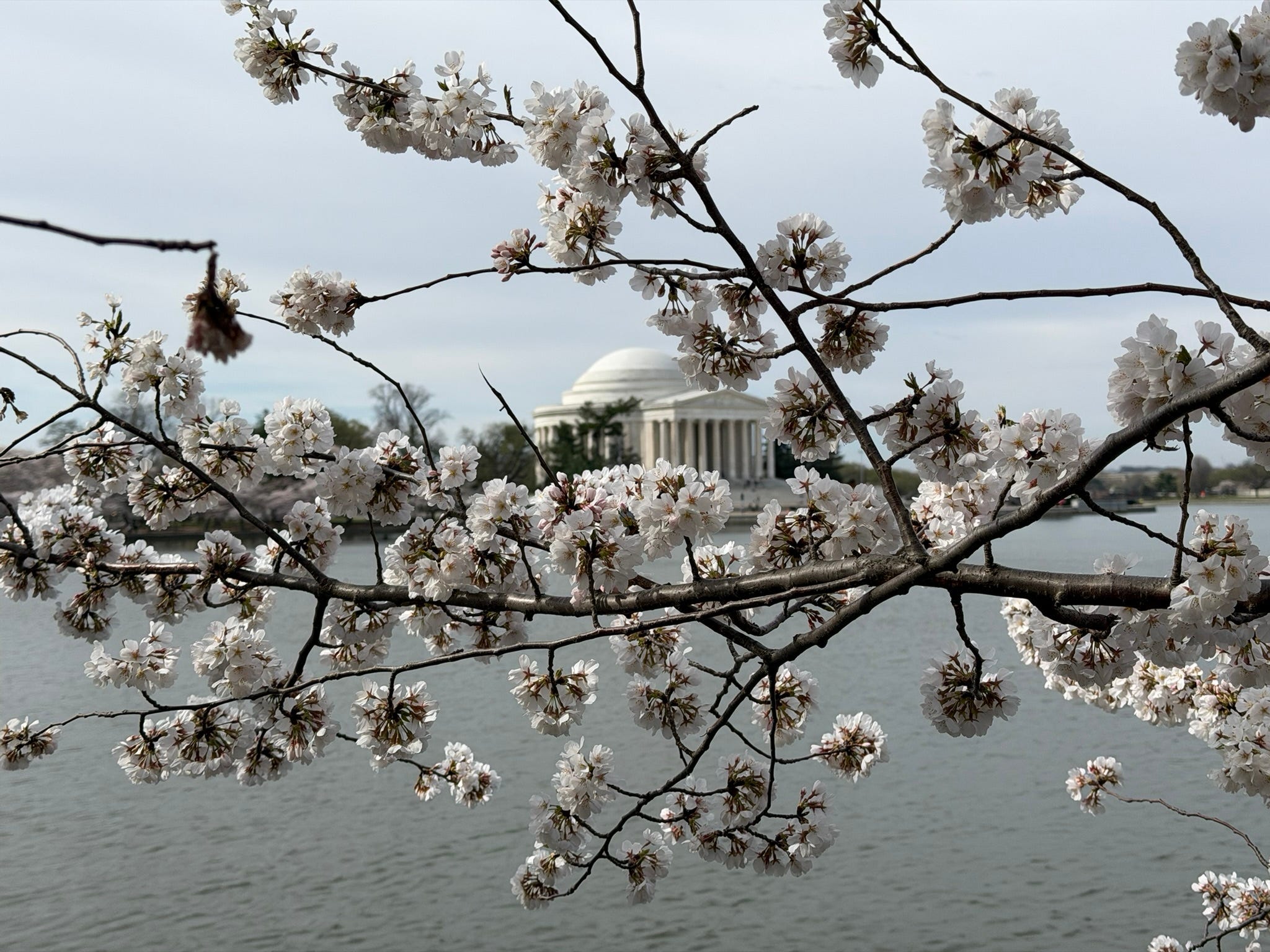
Yet, as the necklace of emerging cherry blossoms around the Tidal Basin at the Jefferson Memorial reminds us, what is here today is fleeting. Tech’s primacy at the center of power is a brief and enlightened moment amidst the post-winter avenues of the nation’s capital. Right now everyone knows our name, but it feels like we are just one cold snap away from turning the budding new shoots of our industry into the compost fertilizer for tomorrow’s populist rage.


does it turn after the midterms or when 2028 primaries start and the pols start picking on tech to distinguish themselves