

That winter storm and antifragility
What Taleb and Stewart Brand have to say about the winter wonderland

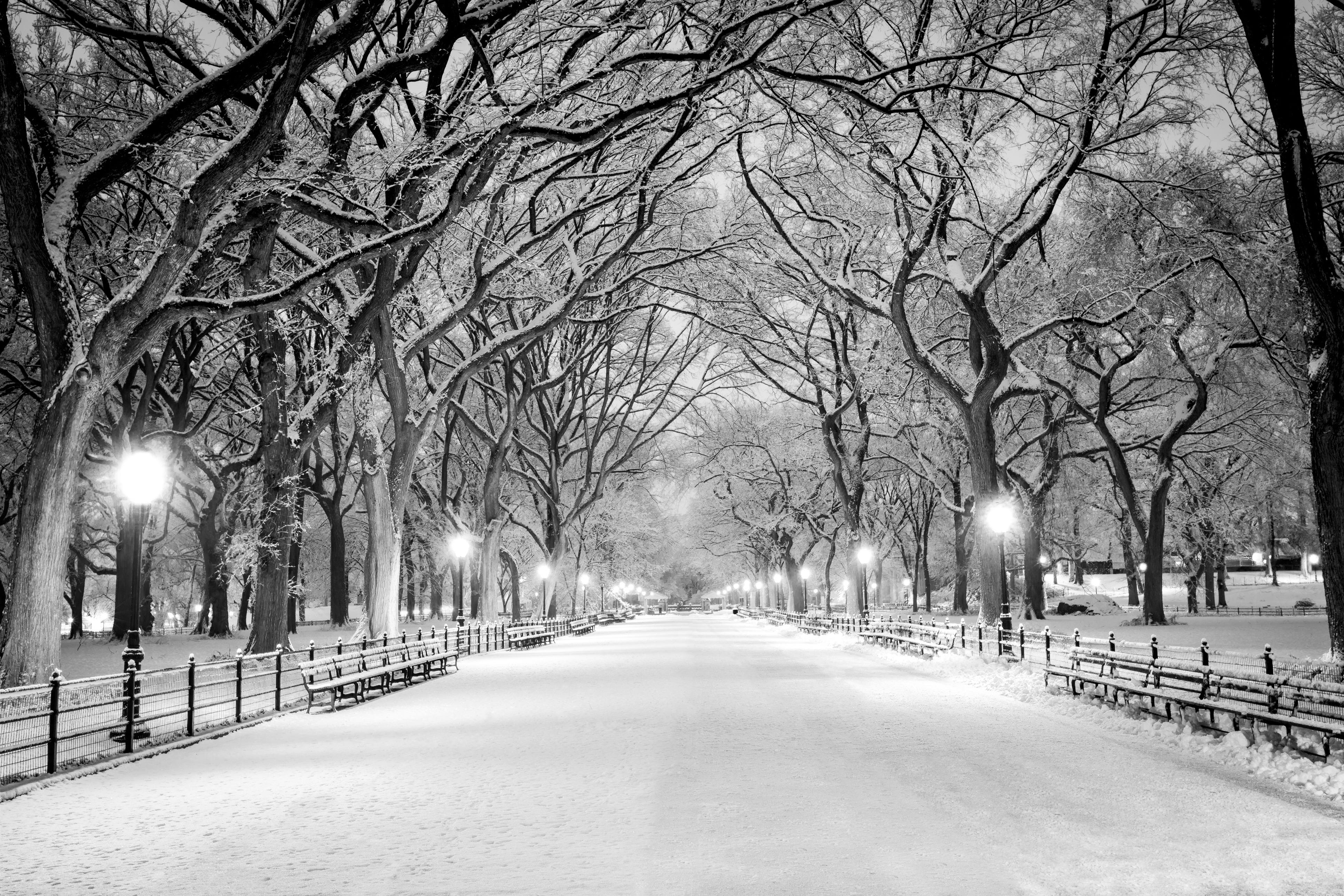
This weekend, I got to experience my first walk through snow in New York City. The experience made me think about antifragility and American civilization. Our largest city ground nearly to a halt simply because of frozen water, wondrous as those flakes might be. The news outside the city was equally grim, with Southern states enduring power outages that may take considerable time to address.
Americans pride ourselves on resilience, yet our critical infrastructure struggles to withstand both natural and man-made shocks. Each year, there is a natural disaster that “no one saw coming.” Whether policy decision or inaction is to blame (Texas had zero snowplows in North Texas until 2011, and power companies around the country have chosen not to improve their local grids) our society veers toward absolute efficiency at the cost of protections from tail risks.
Winter Storm Fern is no different, which raises an important question: What would happen if the damage came not from a natural disaster but from a hostile state actor intentionally targeting transportation and power systems?
Mother Nature may dump inches of slush across America, tripping up society for a day or two. But a clever adversary can use hybrid warfare to seize asymmetric advantage. Fragile things can be destroyed at a significantly lower cost than it takes to produce or replace them. For instance, it would take minutes to destroy one of the transformers that enables our substations. By contrast, manufacturing another one to replace it has a 120-week lead time. It does not take a skilled aggressor (or even a smart one) to sabotage the right substation and cause mass disruption. Mother Nature might get lucky; an adversary can optimize.
Consider Asheville, North Carolina, and the time required to clean up the aftermath of Hurricane Helene. During a road trip to Tennessee this October, I was shocked to be diverted around Asheville due to a partial closure of I-40 still causing delays. The Interstate Highway System was originally designed to make America ready for a nuclear holocaust; now it can barely survive the wild.
Statistician Nassim Taleb’s book Antifragile offers a classic risk framework for understanding why our infrastructure is so intolerant of disorder. He characterizes systems within three categories. Some systems are fragile: they fall apart with small amounts of disorder. Other systems are durable and can withstand some disorder, yet they are still worse off afterward. The most resilient systems — which he calls antifragile — improve with disorder. Ultimately, inanimate objects are typically categorized as durable or fragile, but systems composed of humans can become antifragile.
The web of bureaucratic requirements around critical recovery work often gets in the way of the workers tasked with those efforts. The question is what we can do to turn this morass into an antifragile system that recovers quickly and improves its recovery speed with each disruption. This gets the power on faster, and the increased production should improve the quality of the components being repaired.
Without supply chains and labor forces to quickly build anew, we must be able to maintain what we have already built.
In Breakneck (and on the Riskgaming podcast), Dan Wang poignantly observes that the United States is a lawyerly society compared to China’s engineering society. Each type has its benefits and drawbacks, but the way he has described China’s fast-paced infrastructure improvements is compelling. Even more striking, Wang says that the America of the early 20th century was an engineering society. This was a time when Americans built great things, including much of our current infrastructure.
The tension lies between the extent to which we pursue antifragility versus durability. An optimist could argue that infrastructure fragility is simply an engineering problem, but the reality is that if Wang’s observation is true (and I think it is), calcified legal hurdles will continue to be a barrier to expanding and improving infrastructure — a particular challenge as the United States contemplates reindustrialization.
As Stewart Brand argues in his new book Maintenance, just using and possessing infrastructure is not where excellence lies. Instead, and especially without supply chains and labor forces to quickly build anew, we must be able to maintain what we have already built. Indeed, maintenance is what will make infrastructure resilient — or in Taleb’s terms, antifragile.
The exact mix between systemic redesign in pursuit of antifragility and simply maintaining what we have will be hard to find. Thankfully, the goal of each is the same: to create reliable infrastructure that serves Americans. The enemies of both are indecision and apathy.
For the United States to develop power, water, telecommunications and transportation systems that are truly antifragile, we will need to prioritize repairs.
For the United States to develop power, water, telecommunications and transportation systems that are truly antifragile, we will need to prioritize repairs. This would look like both improving our existing infrastructure and increasing the production of parts needed to repair it, a trend that Lux has been looking at called “fixware.” While continuing to emphasize safety, this process should focus on production speed and on developing the supply chain to maintain the newly reinvigorated system.
An individual substation cannot become antifragile, but a company that can build or repair substations rapidly is part of system-wide antifragility. A single transformer may always be vulnerable to attack or natural disasters, yet a diversified supply chain that continually improves transformers can ensure the power grid remains resilient in the face of disorder.
Acts of nature and hostility will persistently threaten our critical infrastructure, but an antifragile system that rapidly heals and improves will minimize the damage they cause. Whether America has the capacity to build such a system is a question Winter Storm Fern once again brings to the fore.
The analysis, opinions, and recommendations contained in this memorandum are solely those of the author in a personal capacity. They do not reflect the official policy, position, or endorsement of the Department of the Air Force, the Department of Defense, or any other U.S. government entity.
Don’t miss


 | A guest post by
|