

How to be a straddle power
Korea is just one country creating a dense mesh of tech and political deals to secure power

This week’s top selfie isn’t exactly Ellen DeGeneres’s famous shot, but hey, it’s hard to get the masses to care about the interplay of foreign policy and AI sovereignty (and one wonders whether Chinese president Xi Jinping or Ellen is harder to work with, but I digress).
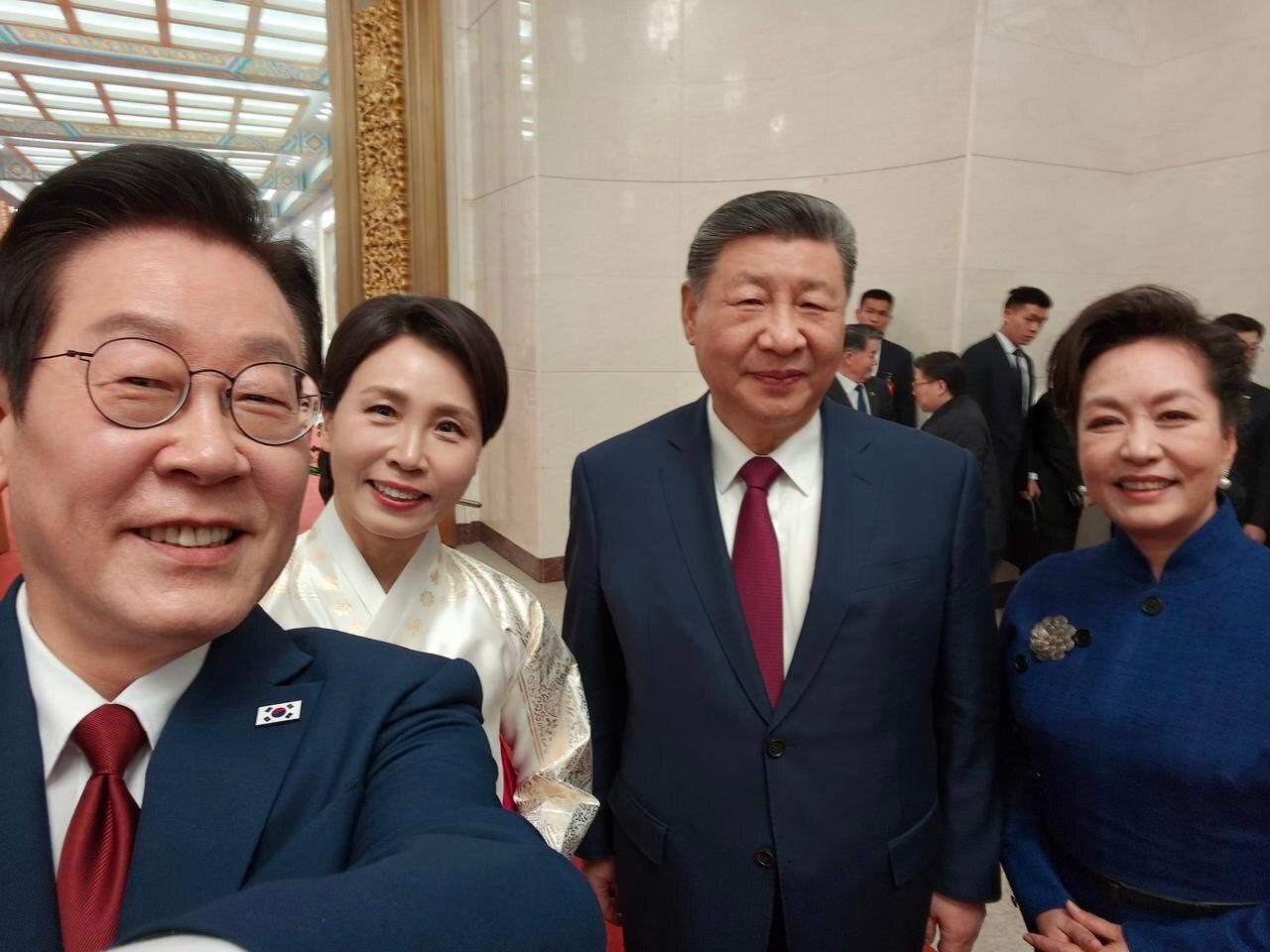
South Korean President Lee Jae-myung has the toughest job on the world stage. He has to placate U.S. President Donald Trump and protect his country’s massive and growing trade surplus with the United States. Then he has to rebuild long-frayed ties with China while pressing the country to help him improve relations with always-be-firing-missiles North Korea (the latest salvo came Monday, complete with alleged hypersonics). Plus, Lee must balance the Korean public’s historical antipathy toward Japan while forging a relationship with Japan’s most nationalist leader in years in hopes of buttressing Northeast Asia’s axis of democracy.
But wait, that’s not all! Lee must also orchestrate a complex arrangement of deals with the Middle East to promote South Korea’s massive nuclear power buildout, including what could be a blockbuster bid in Saudi Arabia. That buildout is part of the region’s sovereign AI initiatives, a challenge Korea is facing as well as it competes against heavyweights from both West and East. Finally, there’s the ongoing awkwardness of South Korea’s defense exports to Ukraine, with the Korean defense industry growing to record highs even as it bans exports to active conflict zones.
This is the endless struggle of a straddle power without the ability to drop special forces on a presidential palace and ransom a country’s oil supplies. Such a position might be extraordinarily challenging, but it also presents equally extraordinary opportunities that can only be seized through a dauntless and ever-evolving strategy.
During the Cold War, political scientist Robert O. Keohane wrote a review article titled “Lilliputians’ Dilemmas,” which first appeared in International Organization before coalescing into a Foreign Policy essay. He discussed how small powers balance relations with big ones, arguing that the first and most important criterion for a small power to navigate the whitewaters of great power politics is that it “…must have a high degree of maneuverability within limits set by its own domestic politics.”
What does that maneuverability look like? Well, it’s constantly inventing new reasons to attract big powers to you on favorable ground. In one of his most profound lines, Keohane wrote “American policymakers are too busy to think up grievances for states that cannot manufacture their own.” In other words, straddle powers need to assiduously create complex conditions where they can secure favorable tradeoffs.
For instance, while Korea is at the pinnacle of a number of industries, AI memory is its most strategic asset right now. SK Hynix is one of the world’s most important manufacturers of high-bandwidth memory, which is required for the most complex AI computations.
The dizzying growth of the AI sector is pushing SK Hynix’s stock and that of competitors like Samsung Electronics to record highs. Over the past month, the company’s stock has jumped more than 35%, and it’s up more than 160% over the past 6 months. Roughly 80% of its employees are domestic, leading to a memory boom in Korean employment and bonus wages that amounted to $80,000 per employee this year (Korea’s GDP per capita is about $36,000). Samsung is right behind with a gain of 130% over the past six months.
Blunt decisions don’t increase strategic maneuverability but instead do the complete opposite, transforming a complex game of negotiations into a linear tug-of-war.
Korean memory exports may not be a rainbow unicorn like Nvidia’s next-generation Rubin chips, but they are indeed supply-constrained, which is leading to record global price increases. That gives the Korean government leverage in negotiations with the United States and China, since neither country wants to surrender an edge to the other by losing priority access to this essential ingredient in the race for AI supremacy.
A single dependency is still a linear negotiation, though, and that doesn’t offer strategic maneuverability (or frankly, a good Riskgaming experience). So let’s remember Keohane’s diktat about manufacturing grievances. Trump has manufactured myriad complaints about Korea, including its yawning trade surplus and its lack of American auto imports. Korea got a significant if temporary reprieve in the aftermath of Trump’s crackdown on a Hyundai and LG Energy Solutions battery factory in Georgia back in September, which saw hundreds of Korean workers deported as they built up American manufacturing.
Yet that factory is precisely the right model. Korea’s most potent strategy is to position itself as the sole enabler of American reindustrialization. While I was off on holiday in mid-December, a major deal was announced that has Korea Zinc upgrading an existing zinc refinery in Tennessee through a $7.4 billion joint venture funded by J.P. Morgan and the U.S. government directly. In the final cap table, the Defense Department would own a 40% stake, Korea Zinc would hold less than 10%, and other investors would own the balance.
It’s a massive project. The Tennessee site is the sole zinc refinery in America, and no domestic facilities have opened for decades. Korea Zinc will take over the existing facility from Singaporean commodities conglomerate Trafigura and upgrade and scale it up to global competitive standards. If the plan is successful, it should shore up America’s zinc supply chain in 5–10 years, improving the country’s resilience in a range of products from metal alloys, like galvanized steel, to chips, batteries and weapon systems.
Since the announcement three weeks ago, Korea Zinc’s stock has gyrated. Initial euphoria sent it zooming to its highest levels in a year, but the stock has since lost much of those gains. It dropped nearly 9% earlier this week when ETF provider MSCI announced the company didn’t qualify for inclusion in its indices due to the share sale required to fund the joint venture with the American government.
Deepening co-dependency isn’t just happening in critical minerals, but also shipbuilding. Korean defense prime Hanhwa closed its $100 million purchase of the Philly Shipyard a year ago, announcing a massive expansion and reinvestment plan that would see volumes increase 20-fold as part of the official — and I kid you not — “ Make American Shipbuilding Great Again” plan (we are definitely better marketers than those Soviet apparatchiks and their “fifth five-year plan” snooze-fests). Hanwha has highlighted that it will train American workers at its Korean facilities, with the goal of improving sovereign shipbuilding capabilities.
Hanwha’s investment complements other announced projects. HD Hyundai Heavy Industries (HII) signed an agreement back in October with Huntington Ingalls Industries (also HII, so obviously a match made in heaven and a nightmare for every journalist and analyst going forward) to rebuild American shipbuilding and invest in “distributed shipbuilding.” HII (the American one) is the shipbuilding company at the center of our first Riskgaming scenario, Hampton at the Crossroads, and it’s the company best known for constructing Gerald R. Ford-class aircraft carriers.
Last month, a three-way agreement brought together American defense prime General Dynamics alongside Korea’s Samsung Heavy Industries and DSEC to focus on next-generation ship design and manufacturing, particularly on the U.S. Navy’s Next Generation Logistics Ship program.
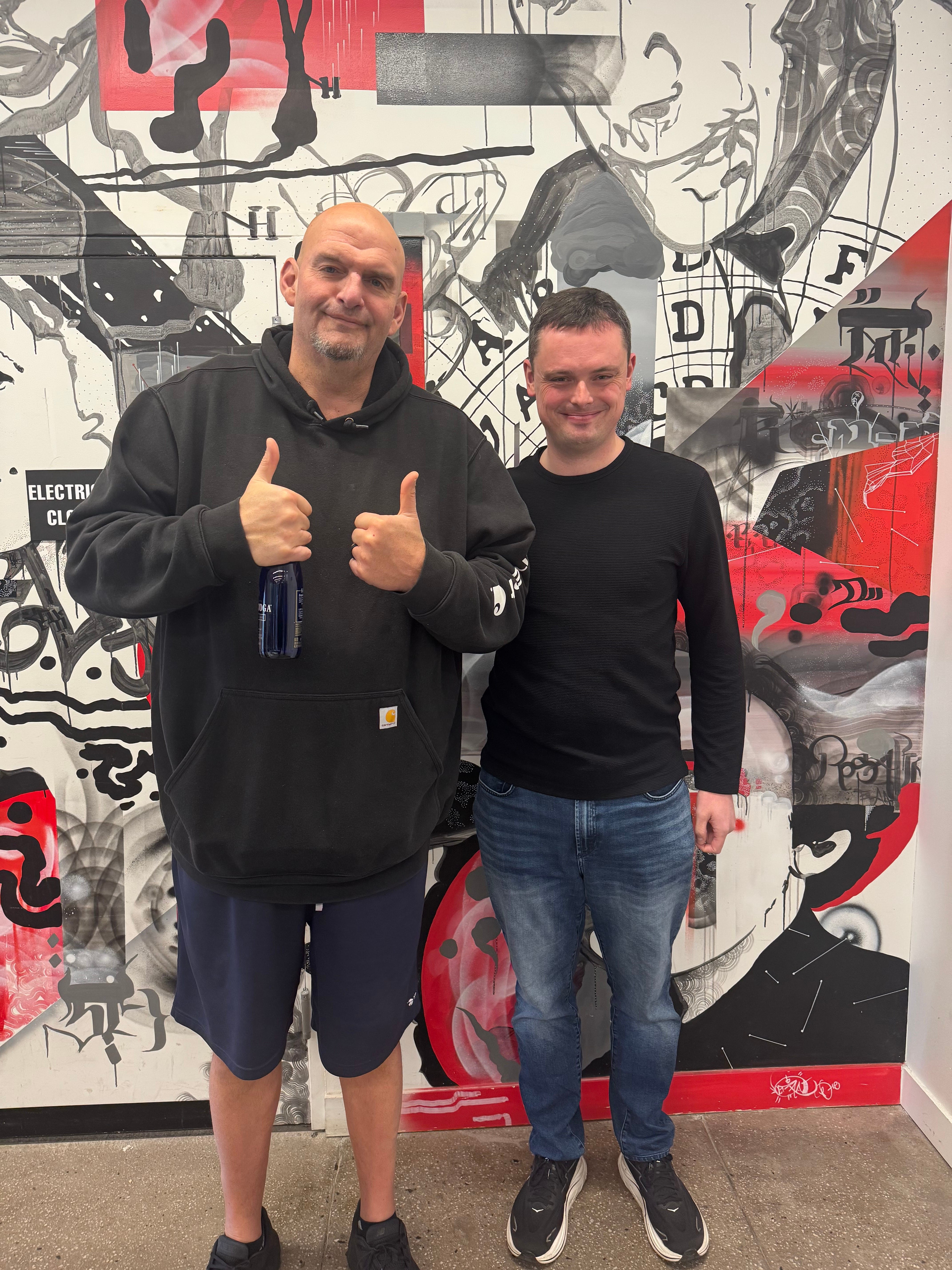
I can keep on going in this Nor’easter flurry of announcements. How many of them will come to fruition much less lead to positive economic outcomes? My cynicism says that there is little chance that more than a fraction of them will ever ultimately be realized. However, I admit I have recently been more impressed at the level of focus on reindustrialization from leaders like Pennsylvania senator John Fetterman, who stopped by last month.
Back to straddling. Korea is attempting to enmesh itself in a complex weave of co-dependent relationships, where it always has another lever to bolster its relative negotiating position against larger superpowers. That’s the right approach for a straddle power: you want to be differentially and strategically valuable enough to raise the cost of intentional or unintentional adverse actions.
That’s obviously the opposite direction of America’s current positioning. Trump’s unilateral cuts to organizations like USAID mean that relatively cheap and featherlight threads connecting the United States to the rest of the world have been burned to smoke. Our trade autarky and increasingly venomous perspective on high-talent visas mean that even the social and business bonds that accrue as American power are weakening.
This approach does give a superpower like the United States more raw power. As I wrote yesterday, we can indeed “just take it” and there’s not much most countries can do in response. Where that strategy goes wrong, though, isn’t when other countries acquiesce, but when they don’t. If and when a country refuses, Keohane’s manufactured grievance toolbox will be empty, and America will be left with only much more expensive strategic actions available.
It’s perhaps the most important lesson I’ve observed across dozens of Riskgaming sessions, and particularly the ones we have conducted using No Man’s Land, our scenario focused on AI capabilities in commercial and defense procurement. Blunt strategies are satisfying to players since they are psychologically thrilling and so much easier to think through. It makes us feel powerful to stab another player in the back, particularly if they can’t immediately respond. Long term though, there are high costs to these fleeting moments of dominant power. Brewing vengeance, for one. But more importantly, the increasing dearth of co-dependencies means that bad outcomes aren’t as easy to prevent in the first place.
The players that succeed in Riskgaming — no different than straddle powers like Korea and others — understand that it is precisely the dense layers of value that have to be unwound that stop undesired decisions by adversaries. Blunt decisions don’t increase strategic maneuverability but instead do the complete opposite, transforming a complex game of negotiations into a linear tug-of-war. It assumes that other players will tug back on that rope rather than ignore it in favor of new strategies and tactics (think hybrid war or gray-zone activities). Brash audacity makes for viral social media posts and the occasional fun selfie, but it’s ultimately deleterious to long-term strategic power.


