


Are we as doomed as Citrini says, winning at prediction markets, and pediatricians’ super immunity. Plus Josh Wolfe interviews Bill Gurley and we launch a new game!

Chatham House
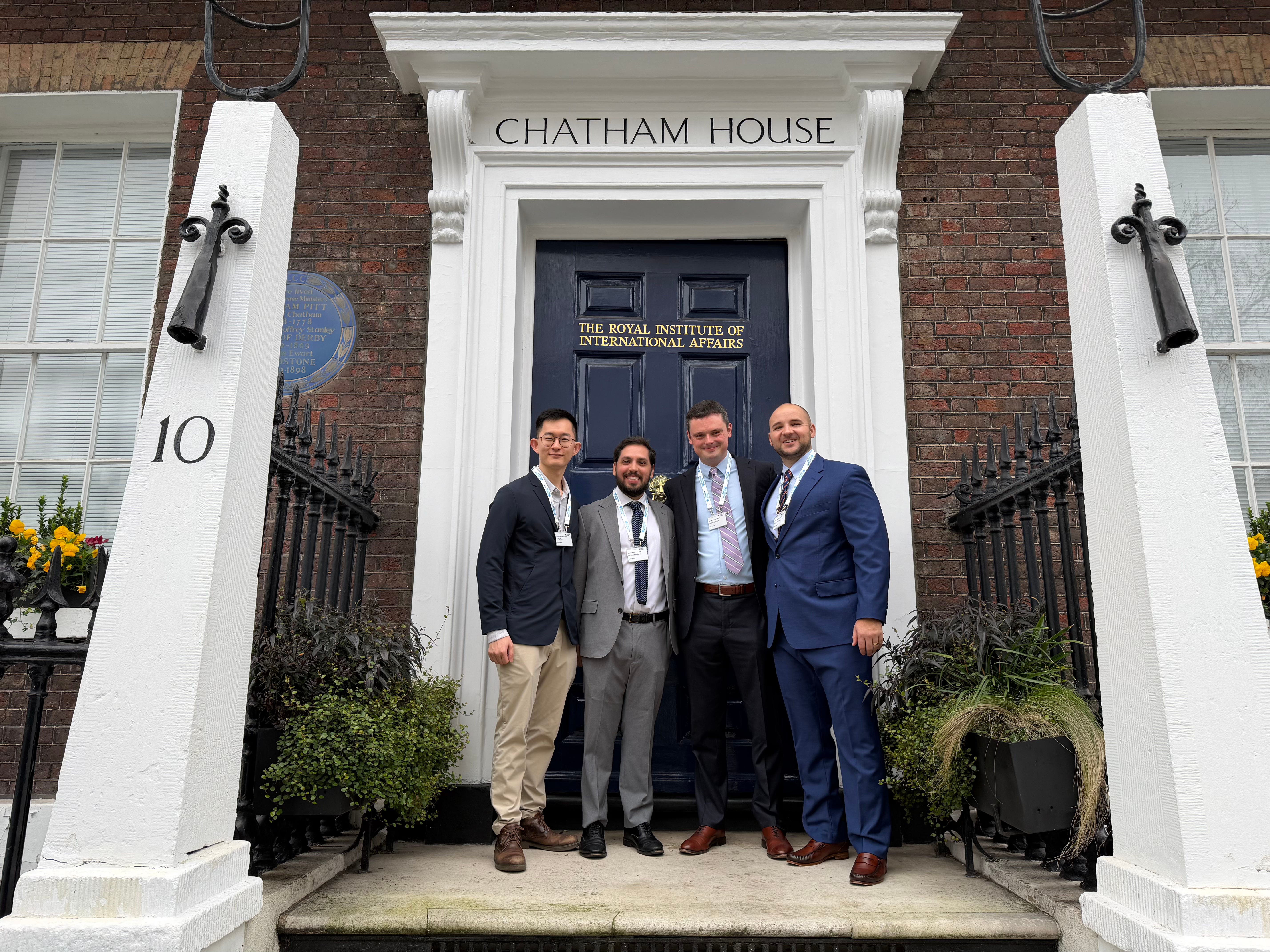
The Riskgaming team was in London this week hosting our European space sovereignty scenario Dead Reckoning during Chatham House’s annual security and defense conference. We’ll have more in the next few weeks to share, but what a distinguished group of policymakers! We’re very thankful that the think tank made official space for Riskgaming amidst the very busy programming.
On Citrini’s death of white collars
The viral research note of 2026 so far was Citrini Research’s prognostication of the complete collapse of America’s economy in 2028 thanks to a proliferation of intelligent bots that force hundreds of thousands of well-compensated, white-collar employees to line up at the unemployment office.
It’s thought-provoking and worth a read, although I am deeply skeptical of the trajectory it presents (Citadel seems to have the most popular counter-argument). Some random thoughts:
Macro Feels Correct, Micro Feels Wrong: I agree with the note that AI will heavily disrupt middle managers and “middlemen” more broadly. Despite AI labor theorists’ focus on professionals and expert knowledge (think radiologists), the true productivity savings of AI is in cutting through the communications overhead within organizations and flattening out hierarchies. Nevertheless, all of the individual micro examples of such productivity seem wrong. For instance, credit card interchange fees. Citrini argues that they will head to zero as agents optimize for the lowest transaction costs. That would assume America follows Europe, which it hasn’t. Why? Because Americans love points. They’re aspirational, and agents in my view will actually increase the usage of points and thus interchange fees as they seek to get the best deal for their users.
Missing Politics: The report doesn’t address any political blowback to the upper-middle class suffering from massive unemployment. Congress and the executive branch may not be the most responsive political bodies around, but they are truly responsive to this voting bloc. If widespread fears of job loss spread among elite Americans, these institutions would act, and act posthaste. That system dynamic must be factored in to make any analysis plausible.
India is F’d: The report bleakly and briefly notes that India will suffer tremendously in the years ahead as outsourced IT services (representing hundreds of billions of dollars of exports) are replaced by agentic AI. I completely agree, and the global development community has yet to recognize the scale of the crisis. The same can be said of the Philippines and myriad other countries.
Watch SaaS Private Credit: Citrini foresees a crash in the SaaS market given high debt leverage ratios against ARR underwriting and the coming substitution of AI. I am intrigued by this scenario and I am analytically neutral. Nevertheless, it’s hard for me to believe that enterprises, which generally subscribe to 100+ SaaS products simultaneously, will magically vibecode them all in one shot. This isn’t a one-year story but the narrative of the next decade — and possibly even more.
Income Taxes May be America’s Achilles’ Heel: The note highlights the fiscal weakness of the United States given that income taxes could plunge with agentic AI. Perhaps hyperbole, but I do think the argument merits serious consideration as traditional purchases of goods and services (fully legible and taxable by Uncle Sam) transform into agentic work by AI (mostly illegible and untaxable). The U.S. deficit is catastrophically high, and any shrinkage of the tax base could have massive repercussions and lead to a spiraling doom loop.
From around the web
1. Bet the House
This week, Laurence recommends a profile of Alan Cole in the Wall Street Journal. Alan, a 37-year-old tax economist, bet his life savings on a Kalshi prediction market wager that, in 2025, U.S. federal spending would continue to rise, contrary to DOGE’s promises of dramatic cuts. It turns out he was right. Readers (and bettors) looking to avoid prediction markets’ adversarial ambiguity problem should take a look at how he structured his wagers.
The U.S. government has been described as an insurance company with an army. Now, with federal debt nearing 100% of gross domestic product, it’s an insurance company with an army and a giant mortgage.
The forces driving spending ever upward—inflation, an aging population, healthcare costs and interest payments—can’t change quickly.
2. Exposure therapy
Scientist-in-residence Sam Arbesman, meanwhile, was struck by the results of a new study written up in New Scientist. Researchers, it seems, have discovered that the blood of pediatricians — who are constantly exposed to childhood respiratory viruses — contains highly potent antibodies against RSV and other viruses. In lab and animal tests, three antibodies derived from their immune cells outperformed existing approved treatments by up to 25x. Maybe you should let your doctor cough on you at your next visit.
It is common lore among paediatricians that they become increasingly resilient to respiratory viruses over the course of their careers, says Trent Calcutt at Port Macquarie Base Hospital in Australia. “I’ve been working with paediatric patients for 10 years now and in my first few years, I would probably get two to three notable respiratory illnesses per year, and now I can go a year without getting any.”
3. Dam politics
Water has become a bit of a theme for us at Riskgaming. From water infrastructure security to floods to chip fabs, we’ve been fascinated by the way the conversation about our most basic resource has been changing in the last few years. To that end, Judge Glock’s recent piece in Works in Progress stands out. Judge argues that, since the Clean Water Act of 1972, federal regulators have steadily ratcheted up water mandates that far exceed what local governments consider necessary, driving up household water costs and stifling urban growth. Water regulation, then, should be returned to local and state governments, who are better positioned to balance costs and benefits for their own communities.
The supposed water wars can largely be solved by redirecting water from low-value irrigation to high-value urban uses. The cost of water is much higher for urban users than irrigators, sometimes by orders of magnitude. But trades are not happening. Right now, because of federal mandates, utility pricing structures, insufficient infrastructure, and a general belief that water is scarce and should therefore be squirreled away and not used, many utilities don’t want more water. Instead they are trying to drive up costs and limit use. As the San Antonio Water System says, ‘it’s important we do everything we can to decrease our water consumption’. Unlike most services or companies, which see their job as meeting consumer demand, utilities see their job as limiting it.
4. Sili-con job
Finally, and as I noted above, the Citrini Research report on AI and joblessness really took off this week. For those curious about the hurdles still facing the automation of human jobs, Robbie Goldfarb’s response to Citrini offers a useful roadmap. He writes that true AI replacement requires clearing several hurdles — technical capability, consistency, regulatory approval, and human trust — and most industries are still in the early game on each.
I can hit a perfect golf shot now and then, but that doesn’t put me on the PGA Tour. What separates amateurs from professionals is consistency. AI can produce impressive outputs, but replacing humans requires sustained, reliable performance. Today’s systems are non deterministic, meaning the same prompt can produce different results because of the underlying statistical nature of how they operate. Meanwhile, AI’s capacity for long-term memory and continuous learning are still evolving, and both are critical to LLMs being consistent. Consistency should be seen as a central factor to whether AI can truly take over a role in a given domain.


